SentinelTwin
A physical-security digital twin for camera planning, coverage analysis, incident paths, comparison, and evidence-backed hardening decisions.
Primary user
Security planners, auditors, operators, and teams reasoning about physical spaces before changing hardware or policy.
My role
Product architecture and hands-on platform development across editor state, scene interaction, coverage simulation, path analysis, and evidence surfaces.
Current outcome
Built the active platform spine for editable scenes, security objects, coverage reasoning, and counterfactual product workflows.
Visual evidence
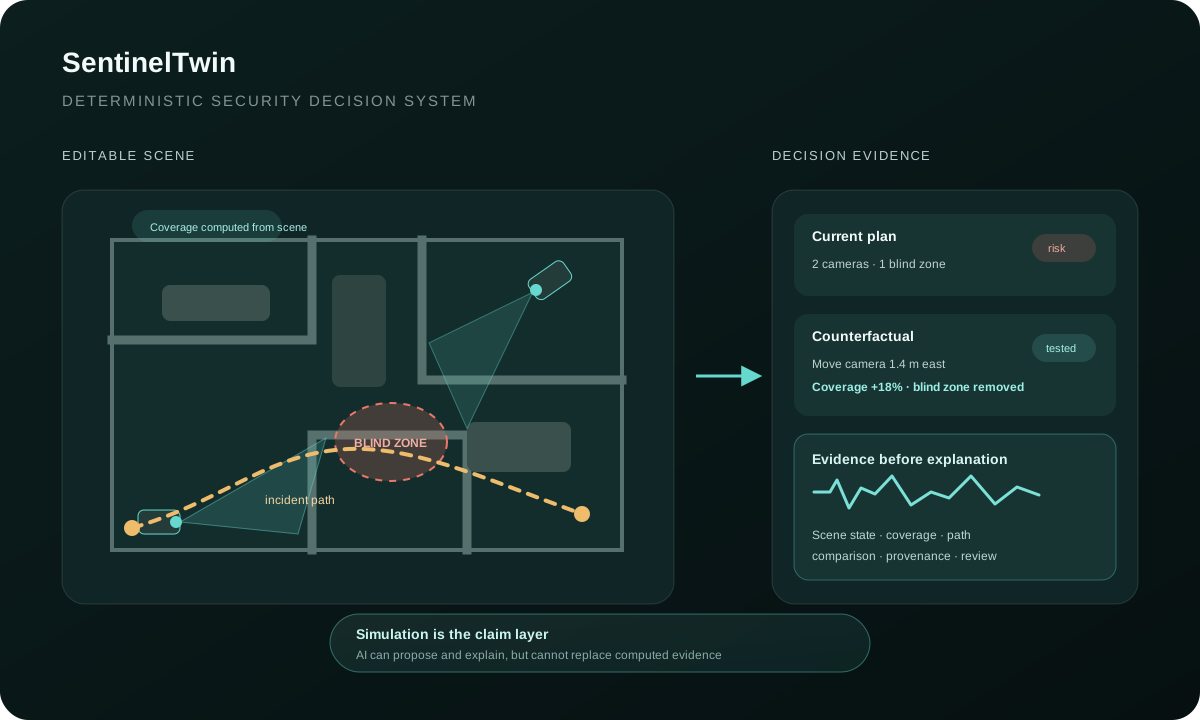 Workflow map
Inspectable implementation evidence
Follow the claim into source, tests, or architecture.
Links are pinned to the source revision reviewed for this case study: 91b22049868b.
Coverage simulation core
Deterministic coverage computation in the simulation package.
Coverage provenance
Source-level support for explaining how coverage evidence was produced.
Coverage regression checks
Regression-oriented comparison logic for spatial coverage changes.
Coverage architecture
Architecture record for the coverage engine and its product boundary.
What exists now
Current implementation boundary
This list is intentionally narrower than a product roadmap. It describes the current working surface used for this case study.
Editable spatial scene
Camera and zone product objects
Coverage and blind-zone reasoning
Path and scenario simulation foundations
Evidence-led comparison direction
Key product decisions
Judgment is more useful than a technology list.
Separate deterministic simulation from AI explanation.
Coverage and path claims should be computed and inspectable before an AI layer explains or proposes changes.
Trade-off
The platform requires a deeper simulation and data-model foundation than a visual-only 3D viewer.
Treat the scene as an operating model, not a static render.
Security decisions change with obstructions, zones, time, movement, and policy.
Trade-off
State management, calibration, and verification become core product work.
Constraints
- Coverage must remain explainable and reproducible
- Scene edits must update analysis without hidden state
- The product must distinguish simulated claims from verified real-world observations