MetaExtract
A structured workspace for inspecting files and documents, extracting high-coverage metadata, and keeping outputs reviewable instead of hiding them behind one opaque model response.
Primary user
Operators, analysts, and technical teams that need structured file evidence, provenance, and exportable metadata.
My role
Product and system design across extraction coverage, data structure, access control, review surfaces, and operator workflow.
Current outcome
Built a working foundation for broad file-metadata inspection and structured export, with the product still under active refinement.
Visual evidence
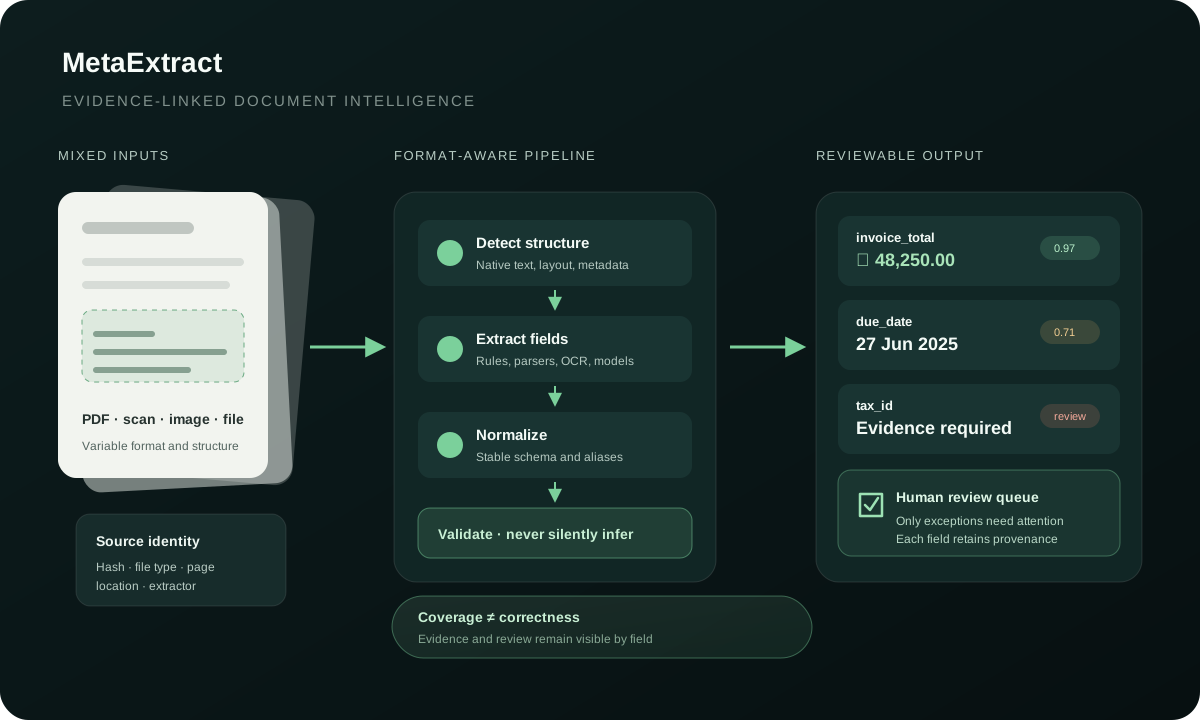 Workflow map
Inspectable implementation evidence
Follow the claim into source, tests, or architecture.
Links are pinned to the source revision reviewed for this case study: 23c1fdeee856.
Architecture and operating model
Repository-level description of the React, Node and Python extraction architecture.
Extraction and access route
Current server route containing extraction, access-mode and response behaviour.
Integration tests
Route-level integration checks for the image extraction workflow.
Route behaviour tests
Focused tests for access and extraction behaviour.
What exists now
Current implementation boundary
This list is intentionally narrower than a product roadmap. It describes the current working surface used for this case study.
Multi-format file inspection
Structured metadata extraction
Operator-facing review surfaces
Access-control and usage concepts
Extensible extraction architecture
Key product decisions
Judgment is more useful than a technology list.
Separate extraction coverage from confidence and provenance.
A large field count is not useful unless operators can understand where values came from and what needs review.
Trade-off
The product surface becomes more complex than a single upload-and-answer screen.
Design for heterogeneous files rather than one document template.
Real collections contain mixed formats, layouts, and embedded metadata families.
Trade-off
Coverage expands incrementally and requires clear capability boundaries by file type.
Constraints
- Different file types expose different metadata families
- High field coverage must not be confused with verified correctness
- Long-running extraction needs visible progress and failure states